


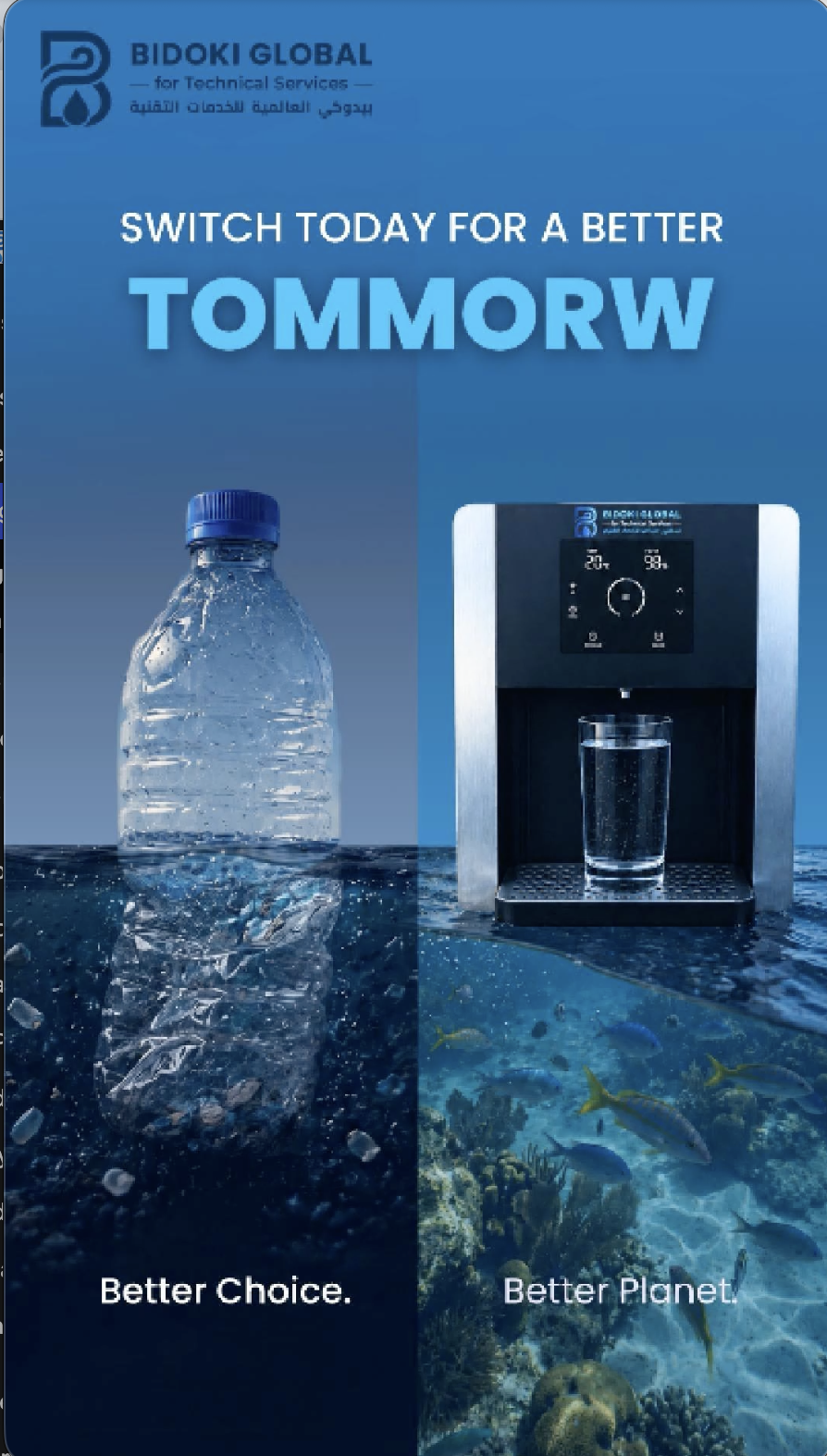
The True Cost of a Plastic Water Bottle (It’s Not 1 QAR!) 🪙💧
When you are walking around a warm park or finishing a football match here in Doha, nothing feels better than a cold drink. You walk into a grocery store, see rows of chilled plastic water bottles, and hand over a single 1 QAR note. You drink the water, feel refreshed, and toss the empty bottle into a recycling or trash bin a few minutes later.
It feels like a tiny transaction that only cost you one coin. But that 1 QAR price tag is a giant illusion! The real cost of that bottle is a heavy tax paid by your parents’ wallets, our beautiful planet, and the future of our oceans.
To understand why this cheap habit is actually incredibly expensive, let’s learn how to spot the hidden costs using a simple memory trick that you can share with your friends: O.T.W.O. (pronounced “Oh-Two”).
Whenever you see a plastic bottle, think of O.T.W.O. to remember exactly what it is doing to our world.
             THE O.T.W.O. MEMORY MATRIX 🧠✨
 ┌─────────────────────────────────────────────────────────────┐
 │  O - OIL INSIDE        Factory fills 1/4 of the bottle      │
 │                        with black crude oil just to make it!│
 ├─────────────────────────────────────────────────────────────┤
 │  T - TRUCK POLLUTION  Heavy diesel trucks burn dirty fuel   │
 │                        hauling heavy water across the desert│
 ├─────────────────────────────────────────────────────────────┤
 │  W - WALLET DRAIN     90% of your 1 QAR coin pays for plastic│
 │                        and shipping, NOT the water inside!  │
 ├─────────────────────────────────────────────────────────────┤
 │  O - OCEANS & EARTH   The empty bottle haunts our planet for │
 │                        450 years and turns into microplastics│
 └─────────────────────────────────────────────────────────────┘
1. 🛢️ O is for Oil Inside (The Factory Cost)
Plastic does not grow on trees, and it isn’t made from natural materials like glass or paper. Plastic is made from crude oil and natural gas, which are fossil fuels dug up from deep underground.
To make a single standard 500ml water bottle, a factory has to burn an immense amount of energy. Environmental scientists did the math and discovered a shocking fact: if you want to know how much oil it takes to manufacture just one empty plastic bottle, you would have to fill that exact same bottle one-quarter of the way up with thick, black crude oil.
When you buy bottled water, you are encouraging factories to pump more oil out of the ground, refine it in giant, smoky chemical plants, and release thousands of tons of greenhouse gases into our sky. This dirty smoke blocks heat from escaping the Earth, making our atmosphere warmer and shifting our global weather patterns.
2. 🚚 T is for Truck Pollution (The Moving Cost)
Have you ever tried to lift a giant, heavy backpack stuffed full of water bottles? Liquid water is incredibly heavy! In fact, one single liter of water weighs exactly one kilogram. Because water has so much mass, moving it around requires a massive amount of physical work.
In regions like the GCC, water travels along a long, mechanical supply chain:
-
- Giant factories on the coast use massive amounts of energy to change seawater into fresh water.
- Automated machines seal that water into plastic bottles and pack them into heavy cardboard boxes.
- Massive, loud freight trucks load up thousands of boxes and burn smelly diesel fuel to haul them across the hot desert highways to supermarkets and neighborhood shops.
Because these trucks are carrying thousands of kilograms of heavy liquid, their engines have to work extra hard, burning massive amounts of fuel and spitting out dark exhaust fumes into the air every single kilometer they drive.
3. 💰 W is for Wallet Drain (The Secret Money Trick)
When you look at a bottle of water, you might assume you are paying for the liquid inside. But that is the biggest trick of all! Economists who study products found out that when you spend 1 QAR on a bottle of water, 90% of your coin is paying for the plastic shell, the colorful plastic wrapper, the plastic cap, and the truck ride.
The actual water inside is worth almost nothing—less than a tiny fraction of a dirham!
If you or your family buy just two small bottles of water every day, it costs 2 QAR a day. That doesn’t sound like much, but over a year, it adds up to 730 QAR for just one person. For a family of four, that is nearly 3,000 QAR every single year thrown directly into the trash can! Buying bottled water is like going to a tap, throwing your money into a bin, and paying a giant “plastic tax” just to take a sip of water.
This is the most dangerous cost of all. When you finish your drink and throw that plastic bottle away, it doesn’t just vanish into thin air. In fact, plastic is a material engineered to last virtually forever.
A single plastic water bottle takes up to 450 years to break down in a landfill or in the nature! That means if a sailor dropped a plastic bottle into the sea hundreds of years ago, that exact same piece of plastic is still floating out in the ocean today. A bottle you throw away this afternoon will still exist on Earth when your great-great-great-grandchildren are grown up.
Even worse, plastic doesn’t dissolve like sugar or salt. Instead, the hot desert sun cooks the plastic until it becomes brittle and breaks into millions of microscopic, invisible pieces called microplastics. These tiny plastic crumbs wash into our seas, where curious sea turtles, fish, and whales mistake them for food. Eating plastic makes marine animals very sick, and it pollutes the beautiful oceans that we rely on for life.
         THE DESTRUCTIVE LINEAR CHAIN VS. THE CLEAN WATER LOOP 🔄

 BOTTLED WATER (Linear & Polluting):
 [Oil Extraction] ➔ [Factory Smoke] ➔ [Heavy Truck Exhaust] ➔ [450-Year Trash Landfill] ❌

 PERSONAL WATER SPRING (Circular & Safe):
 [Pure Air Outside] ➔ [Clean Filters] ➔ [Instant Cold Glass of Water] ➔ [Zero Waste]  ✅
The Super Solution: Your Own Personal Water Spring! 🌬️🎉
We don’t have to keep paying the hidden costs of O.T.W.O. Advanced technology has given us a way to break this wasteful loop entirely. Appliances like the نبع ماء شخصي capture water vapor straight out of the sky and turn it into fresh drinking water right inside your home or school.
Because it harvests water directly from the clean air around you, it completely changes the environmental math:
-
- Zero Plastic Used: You use real, reusable glass cups, saving up to 9,000 plastic bottles from entering landfills every single year.
- Zero Truck Traffic: No heavy distribution trucks need to drive across the country to bring water to your kitchen, keeping our air cleaner.
- Massive Financial Savings: Your family stops paying the 2,000% markup on plastic trash, keeping thousands of QAR inside your parents’ wallets.
By understanding the true science of O.T.W.O., you can become an environmental superhero. The next time someone hands you a single-use plastic bottle, you can smile, shake your head, and tell them: “No thanks, I know the real cost of that bottle—and I choose to protect our planet instead!”
References
- Gleick, P. H., & Cooley, H. S. (2009). Energy implications of bottled water. Environmental Research Letters, 4(1), 014009. (The landmark scientific study tracking exactly how much oil, energy, and greenhouse gases are wasted to create and ship plastic bottles) [doi.org].
- Gleick, P. H. (2006). The World’s Water: The Biennial Report on Freshwater Resources. Island Press. (Explains the global economics of water supply chains and the massive markups on bottled products).
- National Association for PET Container Resources (NAPCOR). (2020). Life Cycle Assessment of Container Systems. (Industrial data outlining how plastic polymers are built using raw petroleum reserves).
- U.S. National Park Service Environmental Safety Guide. (2018). Commercial Plastic Degradation Time Horizons. (Official scientific baseline data showing that a standard PET container survives for 450 years on Earth).
- Mason, S. A., Welch, V. G., & Neratko, J. (2018). Synthetic polymer contamination in bottled water. Frontiers in Chemistry, 6, 407. (The peer-reviewed study proving that plastic bottles break down into microplastics that end up inside our ecosystems and bodies) [doi.org].
- Royer, S. J., et al. (2018). Production of methane and ethylene from plastic in the environment. PLoS ONE, 13(8). (Explains how old trash plastic sitting in landfills releases gases that heat up our atmosphere) [doi.org].