


Introduction
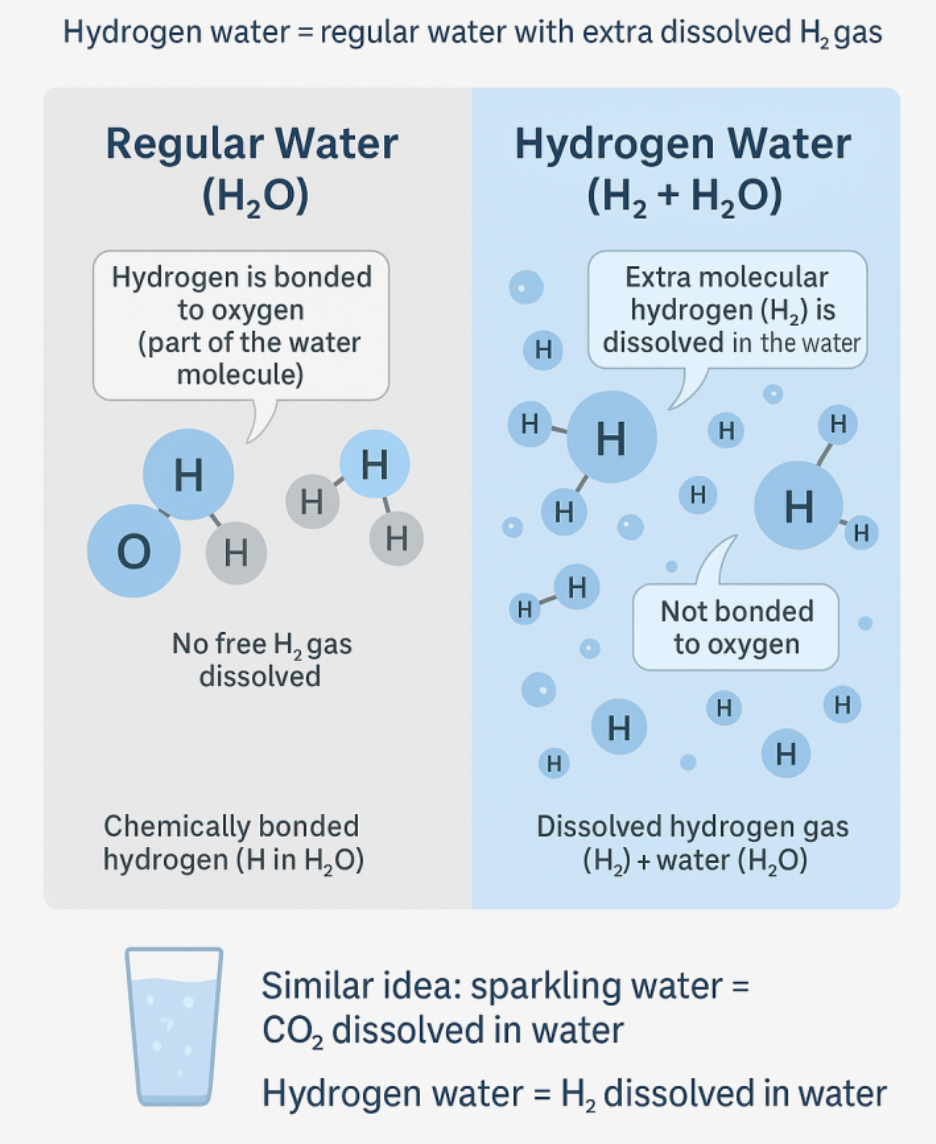
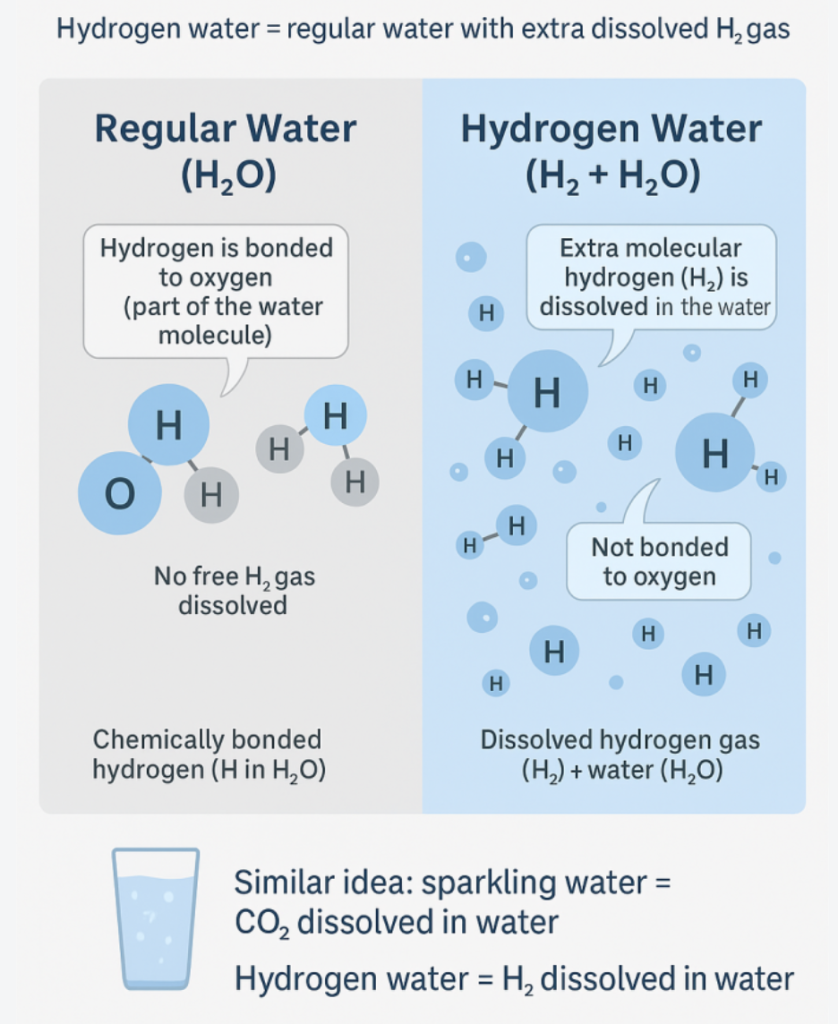
Molecular hydrogen (\(H_{2}\)) has emerged as a novel therapeutic medical gas with potential applications in preventive medicine, rehabilitation, and clinical support [1]. Hydrogen-enriched water (also known as hydrogenated water) is water into which extra molecular hydrogen gas has been dissolved. Because \(H_{2}\) is a neutrally charged, highly diffusible molecule, it readily crosses cellular membranes, blood-brain barriers, and organelle structures to reach the nucleus and mitochondria [2].
1. Proposed Mechanisms of Action
The physiological effects of hydrogen-enriched water are primarily attributed to three distinct biochemical paths:
-
- Selective Antioxidant Activity: Unlike non-selective antioxidants (such as vitamin C or E), molecular hydrogen acts as a mild, selective scavenger. It specifically neutralizes highly cytotoxic reactive oxygen species (ROS)—primarily the hydroxyl radical (\(\cdot OH\)) and peroxynitrite (\(ONOO^{-}\))—without disrupting crucial physiological ROS required for cell signaling and metabolic regulation [1, 3].
- Anti-Inflammatory and Anti-Apoptotic Pathways: \(H_{2}\) suppresses the upregulation of pro-inflammatory cytokines, including tumor necrosis factor-alpha (\(TNF-\alpha\)), interleukin-6 (\(IL-6\)), and interleukin-1 beta (\(IL-1\beta\)). It also aids in downregulating apoptotic pathway factors like caspase-3 and caspase-9, reducing cellular death caused by acute tissue stress [2, 4].
- Gene Expression Modulation: Emerging evidence suggests that molecular hydrogen upregulates the Nrf2 (Nuclear Factor Erythroid 2-Related Factor 2) pathway [5]. Nrf2 activation triggers the body’s endogenous antioxidant defense mechanism, increasing production of essential protective enzymes like superoxide dismutase (SOD), catalase, and glutathione [3, 5].
2. Clinical Health Effects
Clinical and laboratory studies indicate that hydrogen-enriched water may offer supportive, secondary health benefits across several areas:
-
- Metabolic Health: Human clinical trials show that routine consumption can improve metabolic profiles by lowering low-density lipoprotein (LDL) cholesterol, improving insulin sensitivity, and reducing markers of oxidative stress in patients with metabolic syndrome [6].
- Athletic Recovery & Fatigue: Studies on athletes show that drinking hydrogen-enriched water prior to heavy exercise lowers blood lactate levels and mitigates muscle fatigue, likely by limiting exercise-induced oxidative damage [7].
- Supportive Oncological Care: Preliminary clinical research suggests that hydrogen water improves quality of life metrics, preserves appetite, and reduces radiation-associated oxidative stress in patients undergoing radiation therapy for liver tumors, without dampening the tumor-killing effects of the radiation [8].
3. Safety Guidelines, Risks, and Medication Considerations
-
- General Toxicity Profile: Molecular hydrogen is naturally produced by human gut microbiota during the fermentation of dietary fiber. Because of this endogenous presence, the human body is highly tolerant to \(H_{2}\). Global regulatory consensus, including the United States FDA, generally classifies high-purity hydrogen gas and infused water under GRAS (Generally Recognized as Safe) status [9]. No toxic systemic accumulation or severe adverse reactions have been documented in standard clinical dosing trials [1, 9].
- Pharmaceutical and Medication Interactions: There are currently no documented direct chemical or contraindicative interactions between hydrogen water and common over-the-counter or prescription medications. However, because \(H_{2}\) can mildly modulate metabolic pathways, blood sugar sensitivity, and inflammation [4, 6], patients managed with narrow therapeutic index medications—such as anticoagulants (e.g., Warfarin) or intensive anti-diabetic therapies—should coordinate with their physician. Routine medical tracking ensures that concurrent adjustments in blood pressure or blood glucose do not result in medication imbalances.
- Contamination Risks: The primary health hazards associated with hydrogen water do not stem from the gas itself, but from improper generation hardware. Low-grade water ionizers or magnesium stick devices can accidentally introduce heavy metals, chemical chemical residues, or bacterial biofilm buildup if poorly maintained [10]. Consumers must use certified, medical-grade equipment utilizing Proton Exchange Membrane (PEM) or Solid Polymer Electrolyte (SPE) technology to avoid contamination [10].
4. Optimal Concentrations and Age-Group Guidelines
The therapeutic efficacy of hydrogen water depends on the dissolved concentration of \(H_{2}\) gas, typically measured in parts per million (ppm) or milligrams per liter (mg/L). At standard atmospheric pressure, the maximum saturation point of hydrogen in water is approximately 1.6 ppm (1.6 mg/L) [11]. High-pressure technology can temporarily push these concentrations higher. [1]
Clinical consensus suggests a therapeutic baseline dose of 0.5 to 1.6+ ppm consumed at a volume of 1.0 to 2.0 liters per day to achieve physiological benefits [1, 11].
| Age Group | Target Hydrogen Concentration | Recommended Daily Intake | Clinical Intent & Focus |
|---|---|---|---|
| Pediatric (Children & Teens) | 0.5 – 0.8 ppm | Varying fluid requirements (based on pediatric weight guidelines) | Focused solely on standard hydration. Therapeutic \(H_{2}\) administration should be avoided unless guided by a pediatrician. |
| Adults (General & Athletes) | 1.0 – 1.6+ ppm | 1.5 – 2.0 Liters | Mitigating oxidative stress, enhancing muscle recovery, and optimizing metabolic health parameters [6, 7]. |
| Geriatric (Older Adults) | 0.8 – 1.2 ppm | 1.0 – 1.5 Liters (Adjusted for individual renal/cardiac capacity) | Supporting age-related neurodegenerative protection, joint inflammation relief, and vascular health [2, 4]. |
-
- Ohsawa, I., et al. (2007). Hydrogen acts as a therapeutic antioxidant by selectively reducing cytotoxic oxygen radicals. Nature Medicine, 13(6), 688-694.
- Dixon, B. J., et al. (2013). The evolution of molecular hydrogen: a noteworthy potential therapy with clinical significance. Medical Gas Research, 3(1), 10.
- Ohta, S. (2014). Molecular hydrogen as a preventive and therapeutic medical gas: initiation, development and potential of hydrogen medicine. Pharmacology & Therapeutics, 144(1), 1-11.
- Ichihara, M., et al. (2015). Beneficial biological effects and the underlying mechanisms of molecular hydrogen – comprehensive review of 321 original articles. Medical Gas Research, 5(1), 12.
- Kawamura, T., et al. (2020). Molecular Hydrogen As a Narrative Review of its Inflammatory and Antioxidant Capabilities. Frontiers in Physiology, 11, 584988.
- Kajiyama, S., et al. (2008). Supplementation of hydrogen-rich water improves lipid and glucose metabolism in patients with type 2 diabetes or impaired glucose tolerance. Nutrition Research, 28(3), 137-143.
- Aoki, K., et al. (2012). Effects of drinking hydrogen-rich water on muscle fatigue and microinjury caused by acute exercise in elite athletes. Medical Gas Research, 2(1), 12.
- Kang, K. M., et al. (2011). Effects of drinking hydrogen-rich water on the quality of life of patients treated with radiotherapy for liver tumors. Medical Gas Research, 1(1), 11.
- U.S. Food and Drug Administration (FDA). (2014). Generally Recognized as Safe (GRAS) Notice No. GRN 000520: Hydrogen Gas in Water.
- Sano, M., et al. (2022). Quality control and safety assessment methods for domestic molecular hydrogen generation devices. Journal of Medical and Biological Engineering, 42(4), 415-422.
- Kurokawa, R., et al. (2019). Physicochemical properties of hydrogen-rich water: Saturation limits, stability, and therapeutic delivery optimization. International Journal of Electrochemical Science, 14, 8890-8901.
Medical Disclaimer
The information provided in this literature review is intended strictly for general educational and informational purposes. It does not constitute medical advice, diagnosis, or treatment. Consumers should always consult a qualified healthcare professional before introducing novel molecular health regimens or changing existing medical protocols.